Textile materials

A working guide to the fibres and constructions we develop with: what each one does well, where it falls short, and why the trade-offs matter more than the marketing.
Cotton
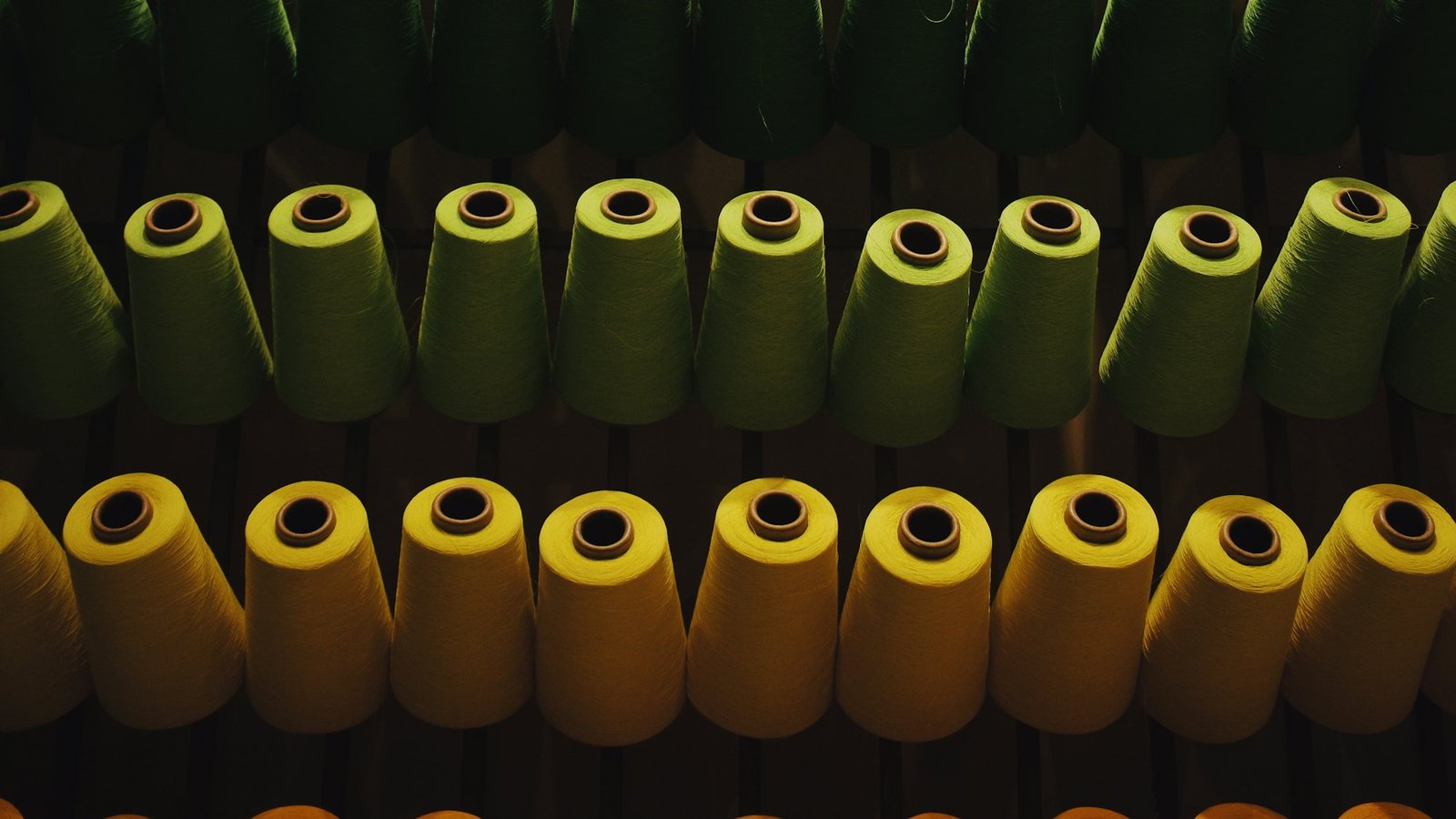
Cotton is breathable, comfortable against the skin, and offers good abrasion resistance in heavier weaves. It handles moisture well in wear, which is why it remains the default for textiles used close to the body for long periods.
Its weaknesses are just as consistent: shrinkage on the first wash unless the fabric has been pre-shrunk, slow drying, and a progressive loss of shape at stress points such as edges, ties and pocket corners. Typical woven cottons for hard-wearing products run at roughly 200–320 gsm; below that range the fabric trades durability for lightness.
Polyester
Polyester holds its shape, is dimensionally stable through repeated washing, dries quickly, and keeps its colour well. Where a product must look the same in month twelve as it did in week one, polyester is usually doing that work.
The costs are lower breathability than cotton and a greater tendency to hold odour. Neither is a defect: they are properties, and the question is whether they matter for the product in hand.
Poly-cotton blends
Blends of 65/35 and 60/40 polyester-to-cotton became the standard for hard-wearing textiles for a reason: the polyester carries the shape retention and wash durability, while the cotton carries the hand-feel and breathability. Raising the cotton fraction improves comfort and costs durability. That is a trade-off, not an upgrade: a "richer" blend is not automatically a better one.
Weave matters as much as fibre.
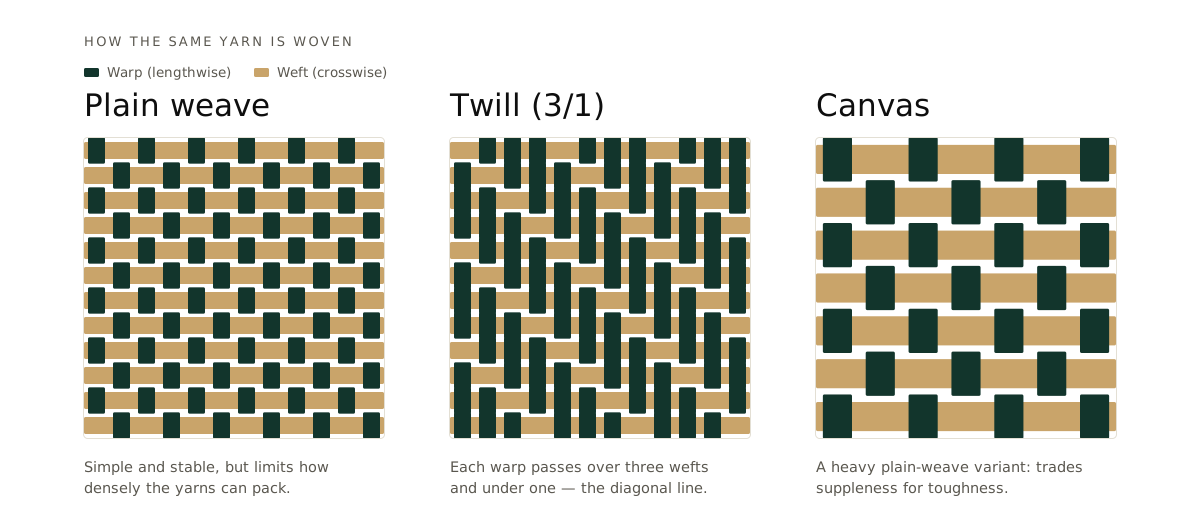
The same yarn behaves differently depending on how it is woven. A plain weave is simple and stable but limits how densely the yarns can pack. A twill, recognisable by its diagonal line, packs more yarn into the same area, resists abrasion better, and drapes more comfortably at a given weight, which is why twill dominates hard-wearing textiles. A canvas is a heavy plain-weave variant that trades suppleness for toughness.
What gsm actually tells you
Gsm, grams per square metre, is the weight of one square metre of fabric. It is the quickest single indicator of how substantial a fabric is: a 150 gsm shirting and a 300 gsm apron canvas are different classes of material.
But gsm alone does not determine durability. Construction and yarn quality matter as much as weight: a well-woven 240 gsm twill from long-staple yarn will outlast a loosely woven 280 gsm fabric from short, weak fibre. Weight is a starting point for a conversation about quality, not the conclusion of one.

Why we publish this
Material choice is presented as marketing language in most of this category. Stating the actual trade-offs, what a fibre costs as well as what it gives, is a deliberate choice, because it is the basis on which our own development decisions are made. How these materials are then verified is covered in Quality & Testing.