Product development
We develop products the way the outcome demands: starting from the problem, not the price. Every stage exists to make sure the finished product genuinely improves on what people already own.
-
Detailed market research
We begin with what is actually read, not what is assumed. Buyer reviews at the one- and two-star end carry the most information, because complaints are specific where praise is generic: nobody writes three sentences about a seam that held. Return-reason data, where available, and the gap between a category's published size charts and the measurements buyers report as wrong complete the picture.
The distribution of a complaint is itself a diagnostic. A recurring fit complaint concentrated in particular sizes points to a grading problem; the same complaint spread evenly across sizes points to a design or material problem. The distribution tells you which, and they have entirely different fixes.
-
Purposeful design and specification
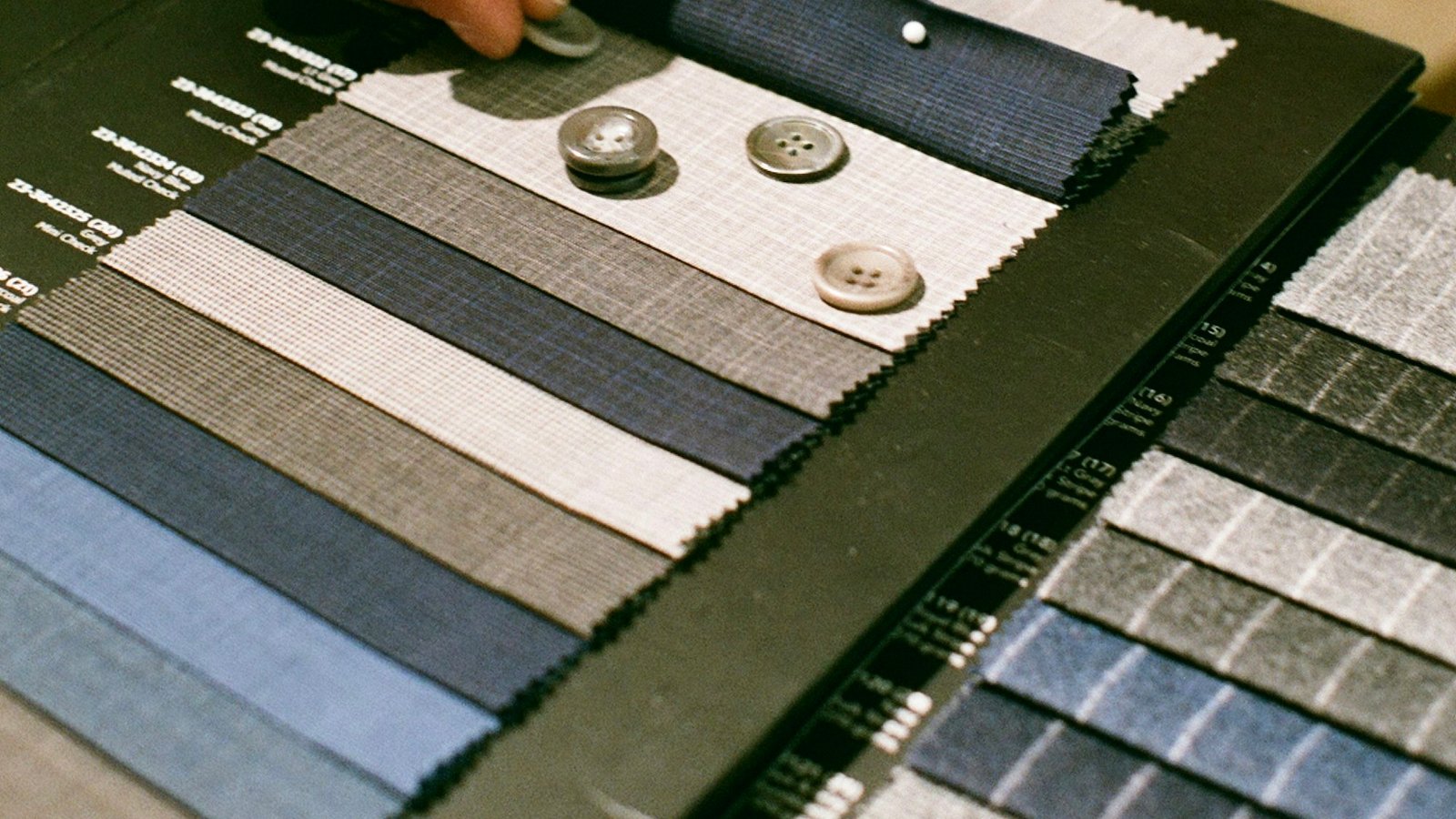
With the problems understood, the product is designed to resolve them, not to replicate a competitor with a small change, but to engineer the improvement the research points to. The design work ends in a written specification: fabric weight and construction, blend ratio, seam type and stitch density, trims, and closure hardware.
Specification is where quality is decided. Everything that happens after it is verification.
-
Materials and construction for durability
Material and construction decisions are made for how the product will hold up in use, not for the lowest possible unit cost. Choosing the right fibre, weight and method of construction is what separates a product that lasts from one built to be replaced. The reasoning behind those choices is set out in our materials guide.
-
Sampling, testing and refinement
A first sample is assessed against a written measurement table, not against an impression. Fit is checked on the body at rest and in the positions the garment is actually worn in: a work trouser that fits standing and binds when kneeling has failed, even if every flat measurement is correct.
Changes are recorded against the spec sheet, so that a later production run can be checked against the same document. Unrecorded substitution by a supplier is the mechanism by which quality silently declines between orders; a written, versioned specification is the defence against it.
What we deliberately do not do.
No specification change is made solely to reach a price point. If a product cannot be made well at a price, the answer is a different product, not a quietly weaker one. And no sample is approved on photographs alone: a photograph shows colour and shape, and almost nothing else that matters.
Improvement you can feel, not just claim.
A better specification on paper means little if it does not change the experience of using the product. Our process keeps the end user in view at every step, so the improvements we make are the ones that matter in ordinary, everyday use.
This methodology serves retailers and business buyers looking to offer products that outperform the market standard. The material decisions behind it are set out in our materials guide, and the checks a product is assessed against on our Quality & Testing page.